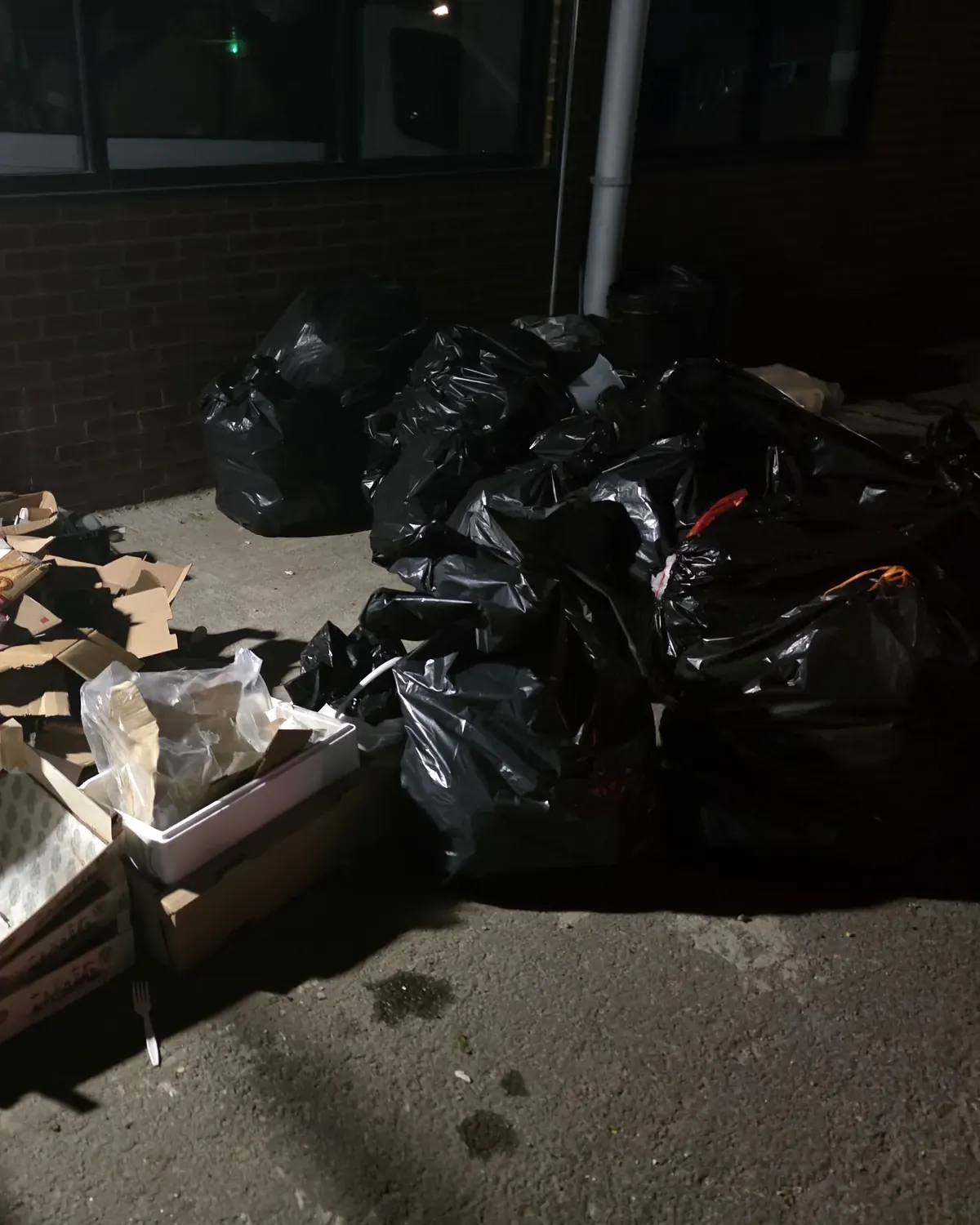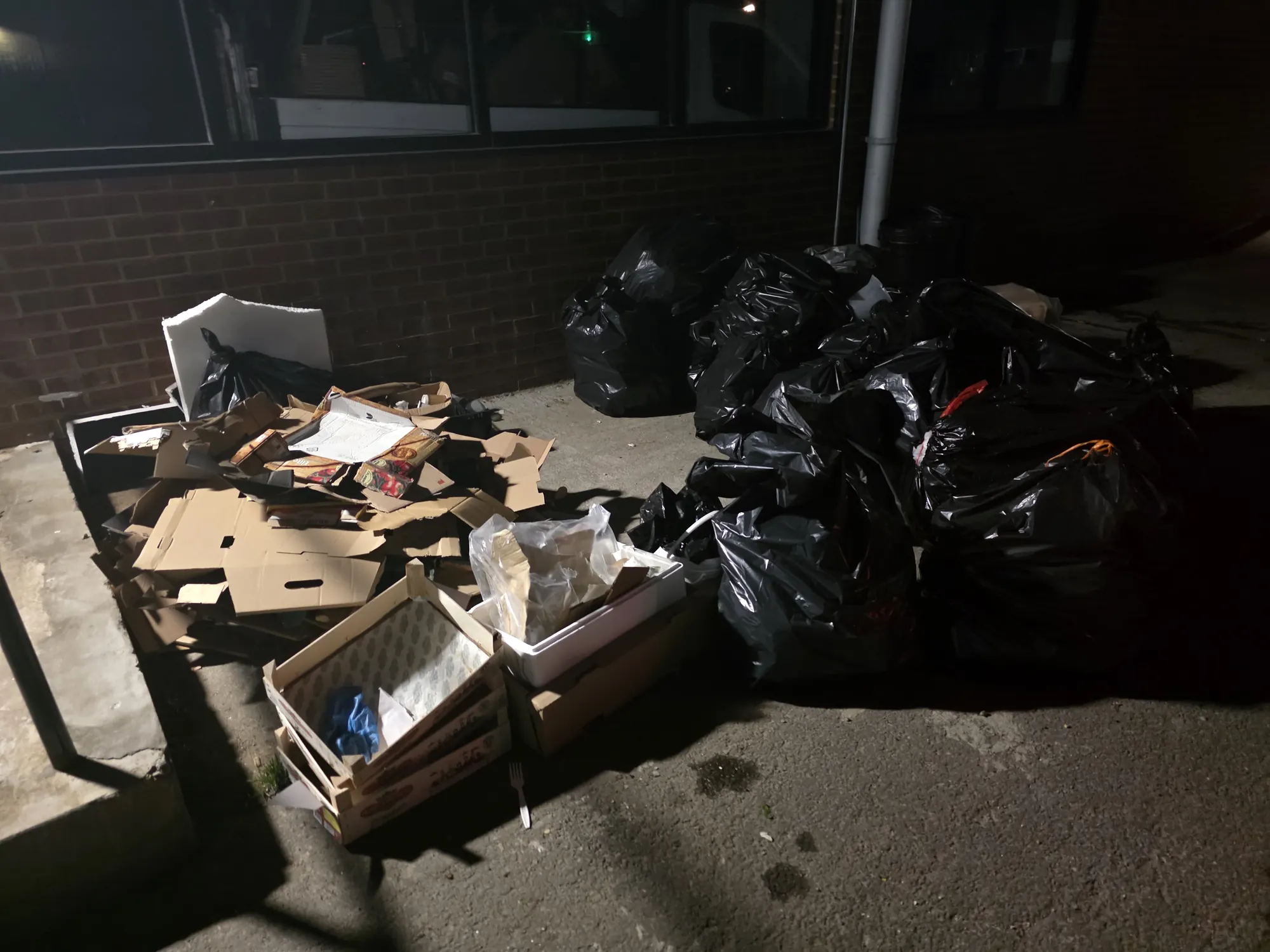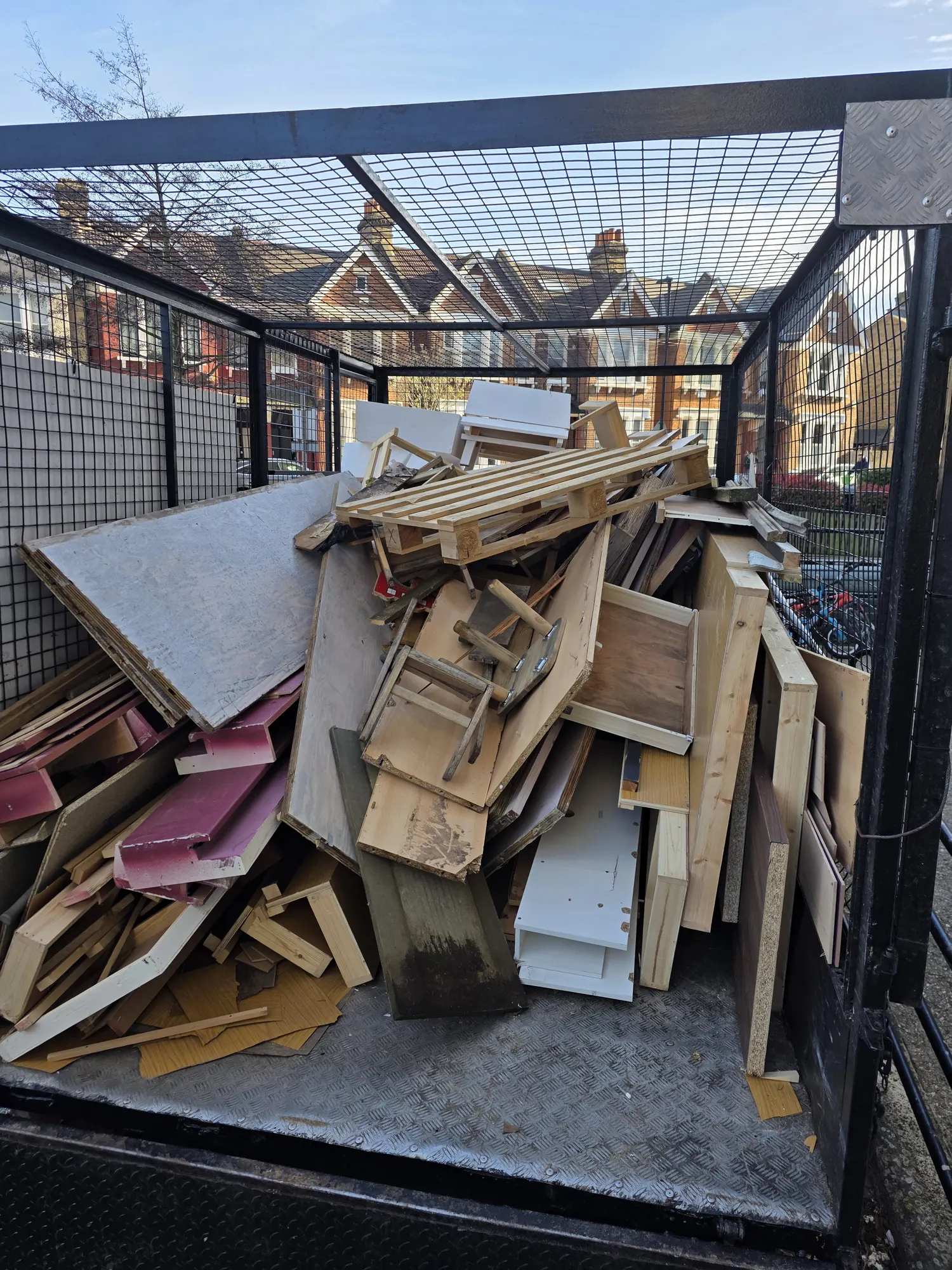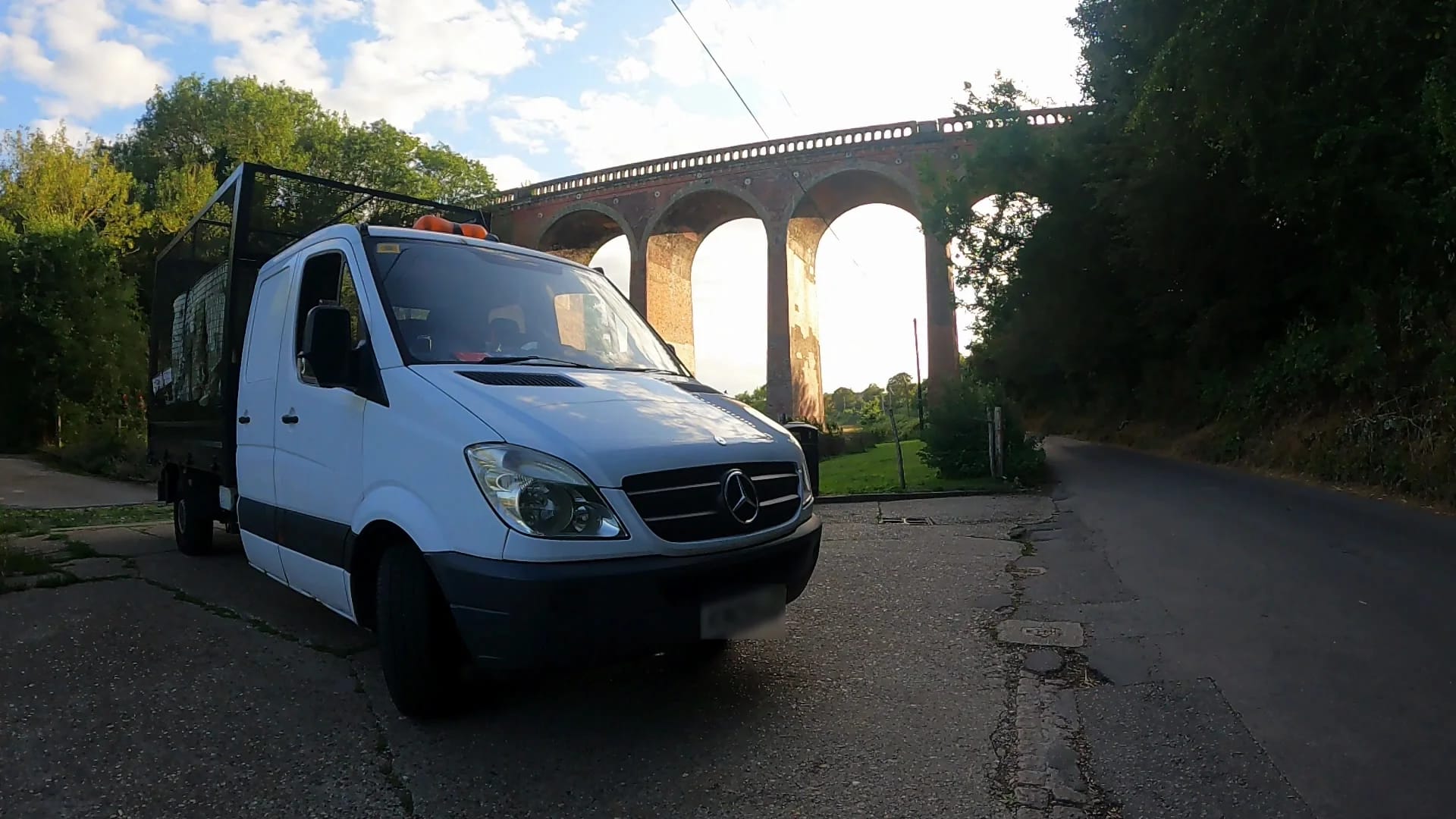
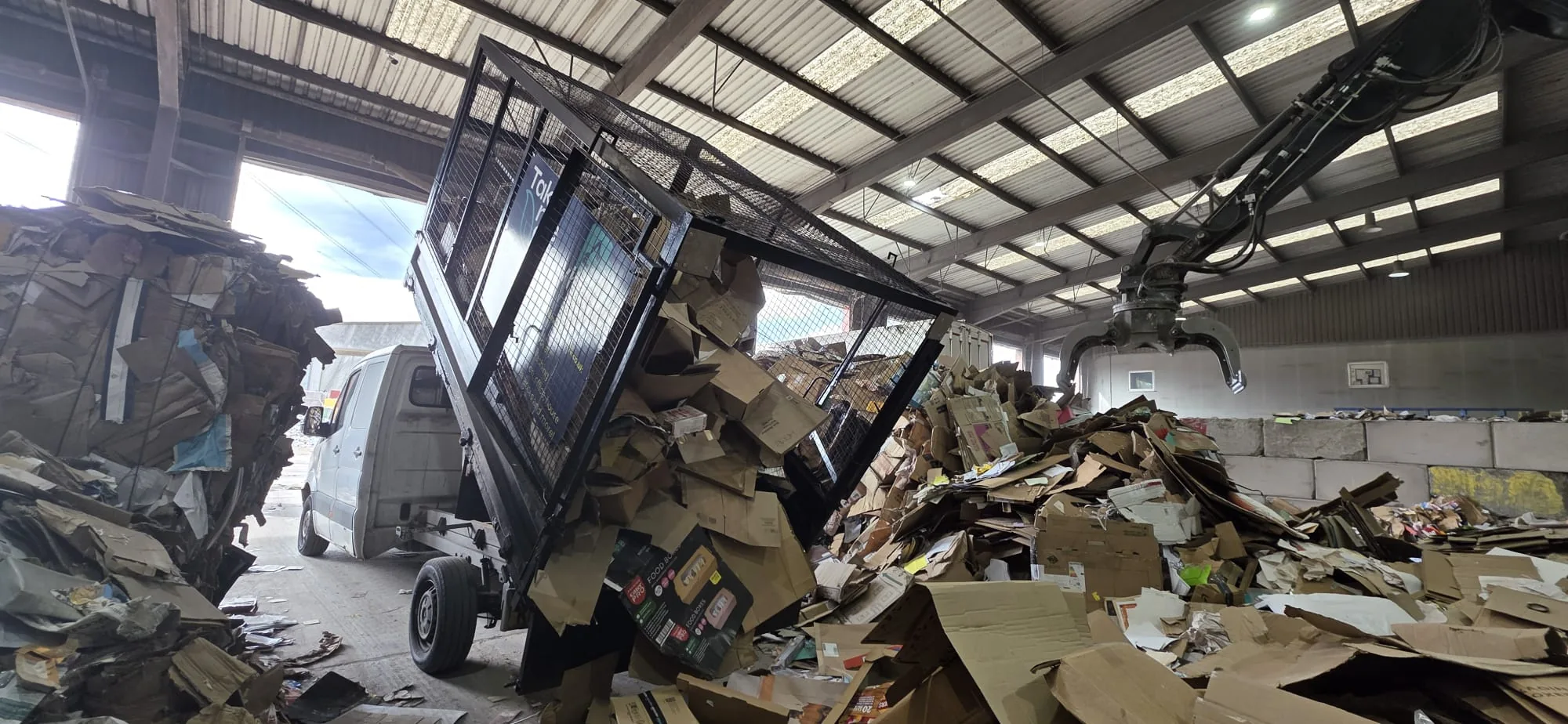
We separate production waste into six streams: general waste, dry mixed recycling, food waste, cardboard, wood and green waste. Each goes somewhere different: food waste to partners who turn it into biogas, good wood to carpentry companies, green waste to compost or mulch, and cardboard and clean recycling to recycling centres. The key is separating on set and keeping recycling free of food and liquids, because contaminated loads can be rejected.
1.Why separating on set matters
Once waste is mixed it’s very hard to unmix. A bag of food tipped into the cardboard, or a coffee cup in the clear bags, can turn a recyclable load into general waste. That’s why most of good recycling happens before the collection vehicle even arrives.
Film London’s Code of Practice says waste created on location should be recycled wherever possible. Our caged vans help with that: they let us keep streams apart from the moment they’re loaded, instead of tipping everything into one skip.
We’re small enough to do the sorting ourselves, but we can only work with what we’re given. A crew that separates as it goes makes the biggest difference to how much of a shoot is recycled, and it costs nothing extra.
2.The six streams, one by one
1. General waste
The stream that’s left once everything else has been separated, and usually the biggest container in our vehicles. Heavy-duty sacks can be provided on site. General waste goes to sites with 100% diversion-from-landfill policies.
2. Dry mixed recycling
Clean bottles, cans and plastic packaging in clear bags. We sort them at our sites and take them on to recycling centres, as long as the load isn’t contaminated. Nothing wet or greasy inside.
3. Food waste
Catering waste, crew leftovers and dressing food from set. We collect it as long as it’s clearly separated, and pass it to specialist partners who turn it into biogas. Keep it in its own labelled bags.
4. Cardboard
Productions get through cardboard by the cage-load: deliveries, props, costume boxes, water packs. We take it for recycling at no extra charge unless there’s an excessive amount. Flatten it and keep it dry.
5. Wood
Timber, flats and set build materials that won’t be reused by the production. We separate it and pass it to carpentry companies we’ve partnered with, so good timber gets a second life.
6. Green waste
Foliage, plants, cut branches and greens dressing. It ends up as compost or mulch. Keep soil and rubble out of the bags.
3.Setting up waste stations on set
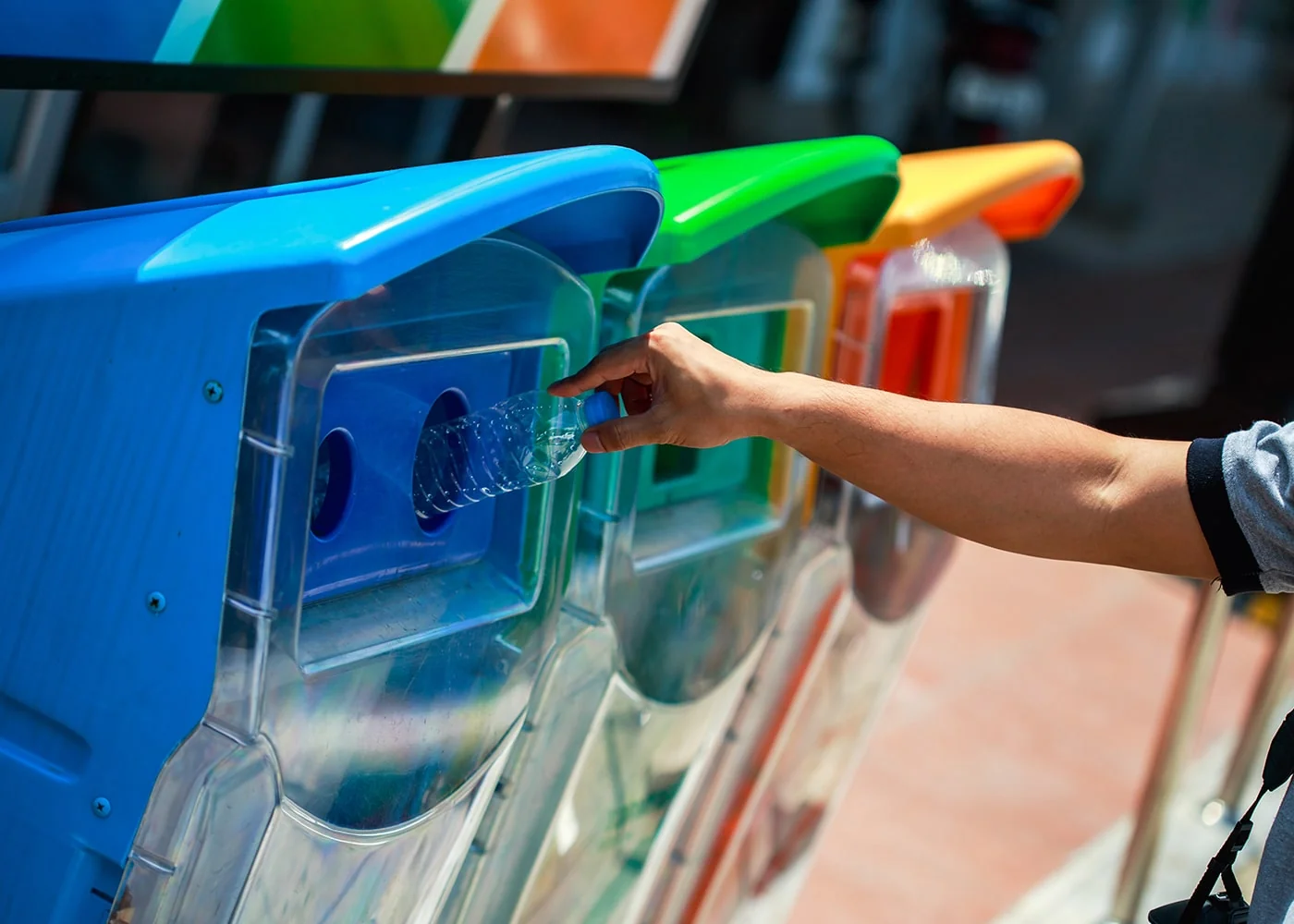
The simplest system is a waste station: a few clearly labelled bags or bins side by side, in the same place every day. Put one at the unit base near catering and one near set if the crew eats there.
- Pick your streamsNot every shoot needs all six. A studio day might only need general, dry mixed and cardboard. A location shoot with catering adds food.
- Use the right bagsClear bags for dry mixed recycling, labelled bags for food, a flat stack for cardboard.
- Label everythingBig, simple signs. Crews are busy and tired; the system has to work without thinking.
- Give someone ownershipA runner or facilities member who checks the station, swaps full bags and spots contamination early.
4.What contaminates a load
- Food and liquids in cardboard or dry mixed recycling. The most common problem by far.
- Wet cardboard. Left out in the rain, it’s much harder to recycle.
- Soil and rubble in green waste bags.
- Painted, treated or glued board mixed in with clean timber.
- Hazardous items such as paint, solvents, oils and gas bottles. These can’t go in any of our streams and need a specialist.
5.Reporting what you recycled
Many productions now need to show what happened to their waste, for a broadcaster, a sustainability scheme or their own targets. Film London runs the Green Screen certification scheme to help productions in London work more sustainably, and waste is one of the areas productions are asked about.
Ask for a free waste report and we’ll give you the number of bags and the approximate weight collected, with a summary and an estimated carbon impact. More on how we handle each stream is on our recycling page.