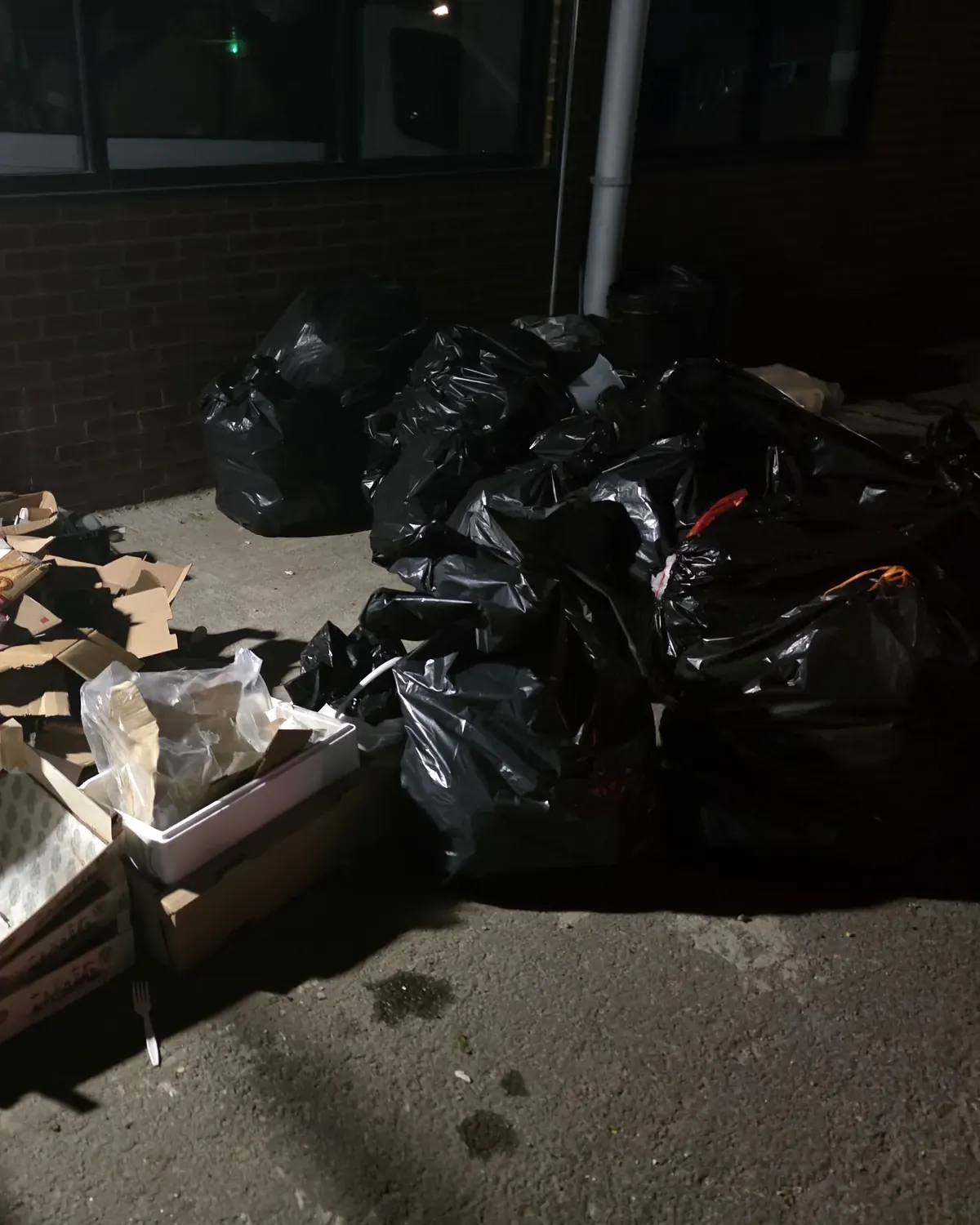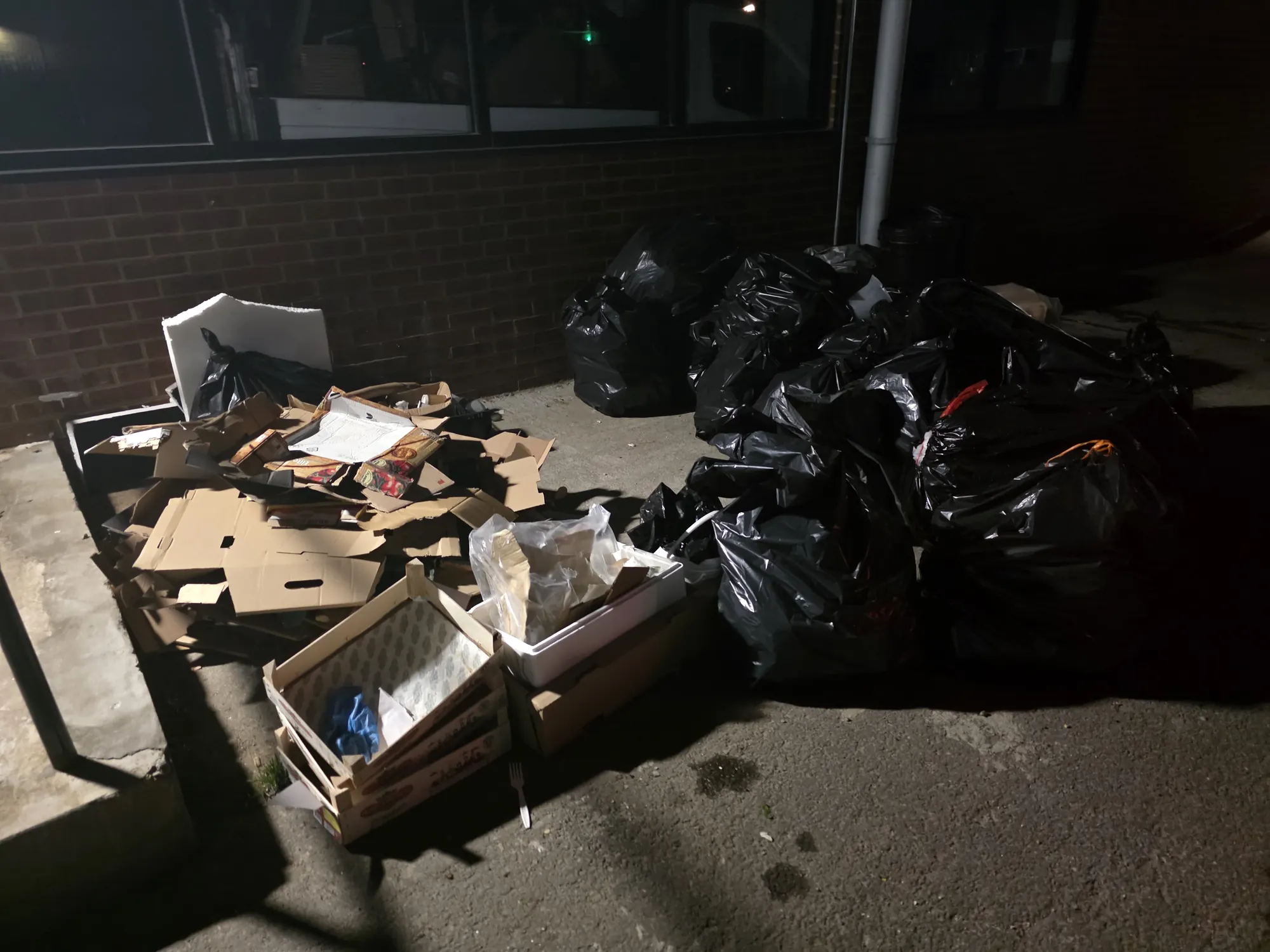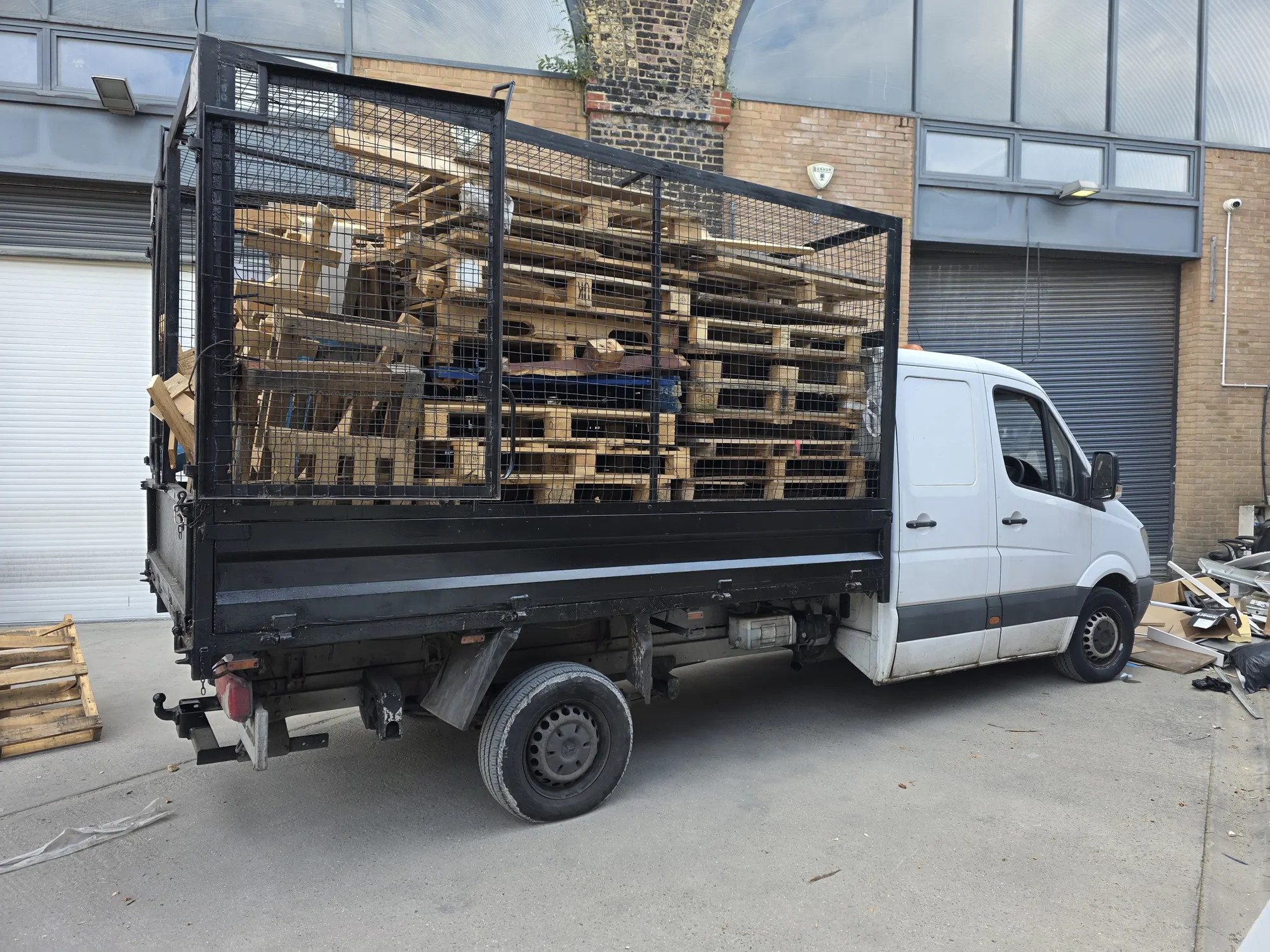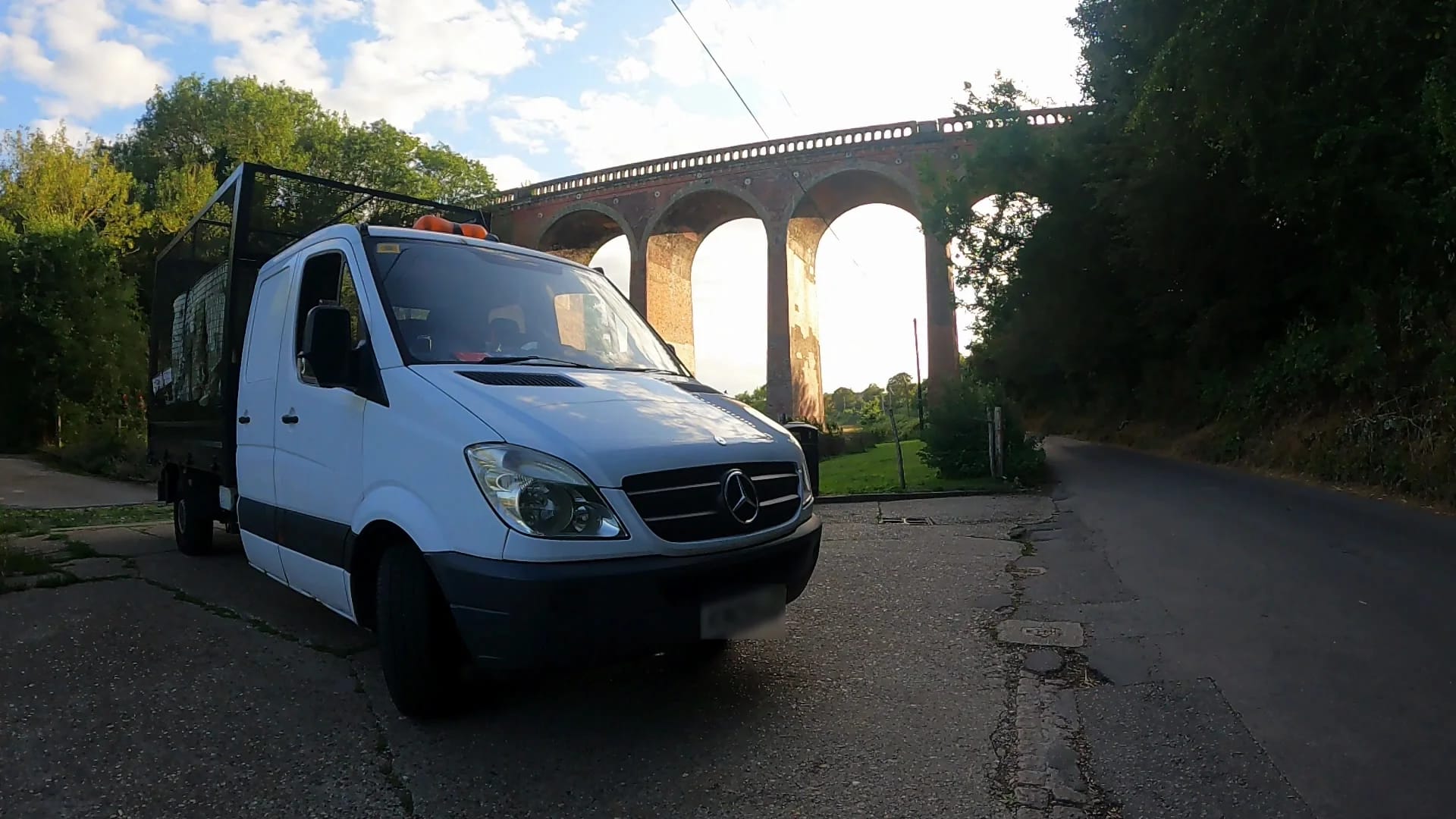
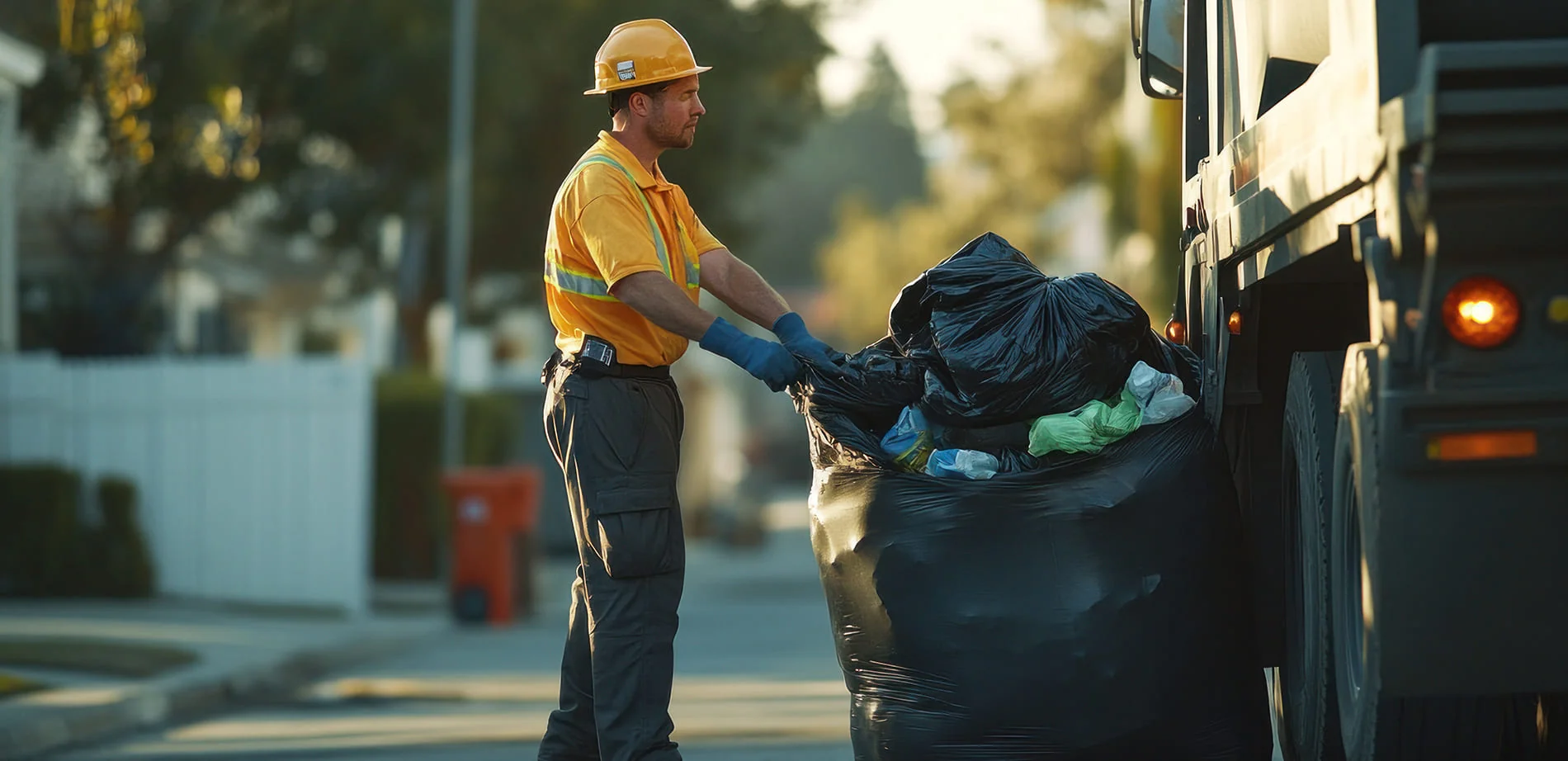
To plan waste for a shoot, list where waste will come from (set, unit base, catering, deliveries), decide which streams you will separate, book collections around wrap times and base moves, and agree access and parking for the collection vehicle. Budget it per collection: with us a standard collection starts from £80 and a whole caged van from £350, with studio strikes and multi-day shoots quoted per job.
1.Step 1: map where the waste comes from
Production waste isn’t one pile. It comes from different departments, at different times, and needs different handling. Start by listing each source for every location and base on the schedule.
| Source | Typical waste | When it appears |
|---|---|---|
| Unit base and catering | Food waste, cardboard, bottles and cans, general waste | Every day |
| Deliveries | Cardboard boxes, pallet wrap, soft plastics | Early in the shoot and at each new location |
| Set build and dressing | Timber, MDF, flats, dressing that won’t be reused | At the strike |
| Greens and seasonal dressing | Foliage, trees, plants | At the strike |
| Offices and production base | Paper, cardboard, mixed recycling | Throughout, and at the end of production |
The unit base produces the steady daily waste. The set produces the big, heavy loads at the strike. Planning them separately is what keeps the strike from becoming an emergency. If you’re new to the term, our guide explains what a unit base is.
2.Step 2: choose your waste streams
Separating waste on set is what makes recycling possible. We work with six main streams: general waste, dry mixed recycling, food waste, cardboard, wood and green waste. You don’t need all six on every shoot. A one-day commercial in a studio might only need three. A long location shoot with catering will need most of them.
Decide before day one, because changing the system halfway through confuses the crew and contaminates the bags. Our guide to recycling streams on a film set explains how to prepare each one.
3.Step 3: build collections into the schedule
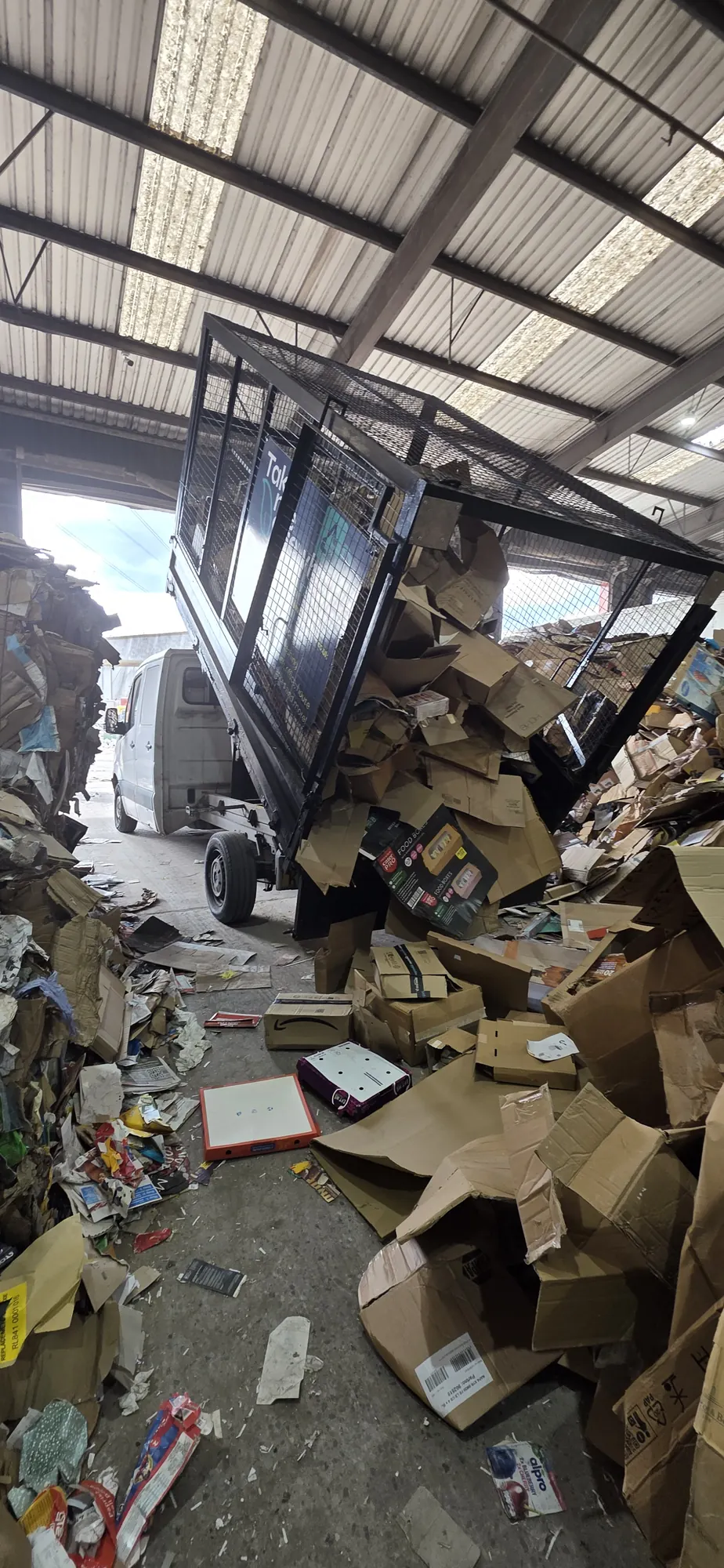
Collections should follow the schedule, not the other way round. Look at the call sheets and mark the moments waste has to go:
- Every wrap at a location you won’t return to. The location has to be clear before you hand it back.
- Every base move. Clear the old base before the trucks leave, not after.
- Regular collections on long bases, so waste doesn’t pile up for days between moves.
- The strike. Usually the biggest collection of the shoot, and often the one with the tightest deadline.
Early calls, late wraps and weekend collections are normal for us. What helps most is a clear time and an honest picture of how much waste there will be.
4.Step 4: plan access and parking
A collection vehicle that can’t get near the waste is the most common cause of a slow, expensive clearance. For each pickup, note where the van can stop legally, how far the waste has to be carried, and anything awkward on the way: stairs, lifts, gates, low arches or soft ground.
The customer is responsible for suitable, legal parking as close to the collection point as possible. Tell us about loading bays, permits or restrictions in advance. Parking, congestion or emission-zone charges linked to the collection are added where they apply.
5.Step 5: budget it
Waste is easy to budget once you know how many collections you need. Our film work is quoted per job, and these are our standard rates as a guide:
| Collection | Price | Suits |
|---|---|---|
| Standard collection | from £80 | Smaller loads from a single location or base |
| Whole cage | from £350 | A full caged van: a busy base, a big wrap, a small strike |
| Studio and multi-day | Quoted per job | Strikes, multi-day wraps and regular base collections |
6.Step 6: decide what you need to report
More productions now have to show what happened to their waste, whether for a broadcaster, a sustainability certificate or their own targets. Decide at the start what you’ll need, because it’s hard to reconstruct afterwards. Counting bags per stream as you go, or simply keeping the streams apart until collection, is far easier than estimating at the end.
We provide a free waste report on request. It includes the number of bags and the approximate weight collected, so the production can see how it did on recycling, plus a summary with an estimated carbon impact.