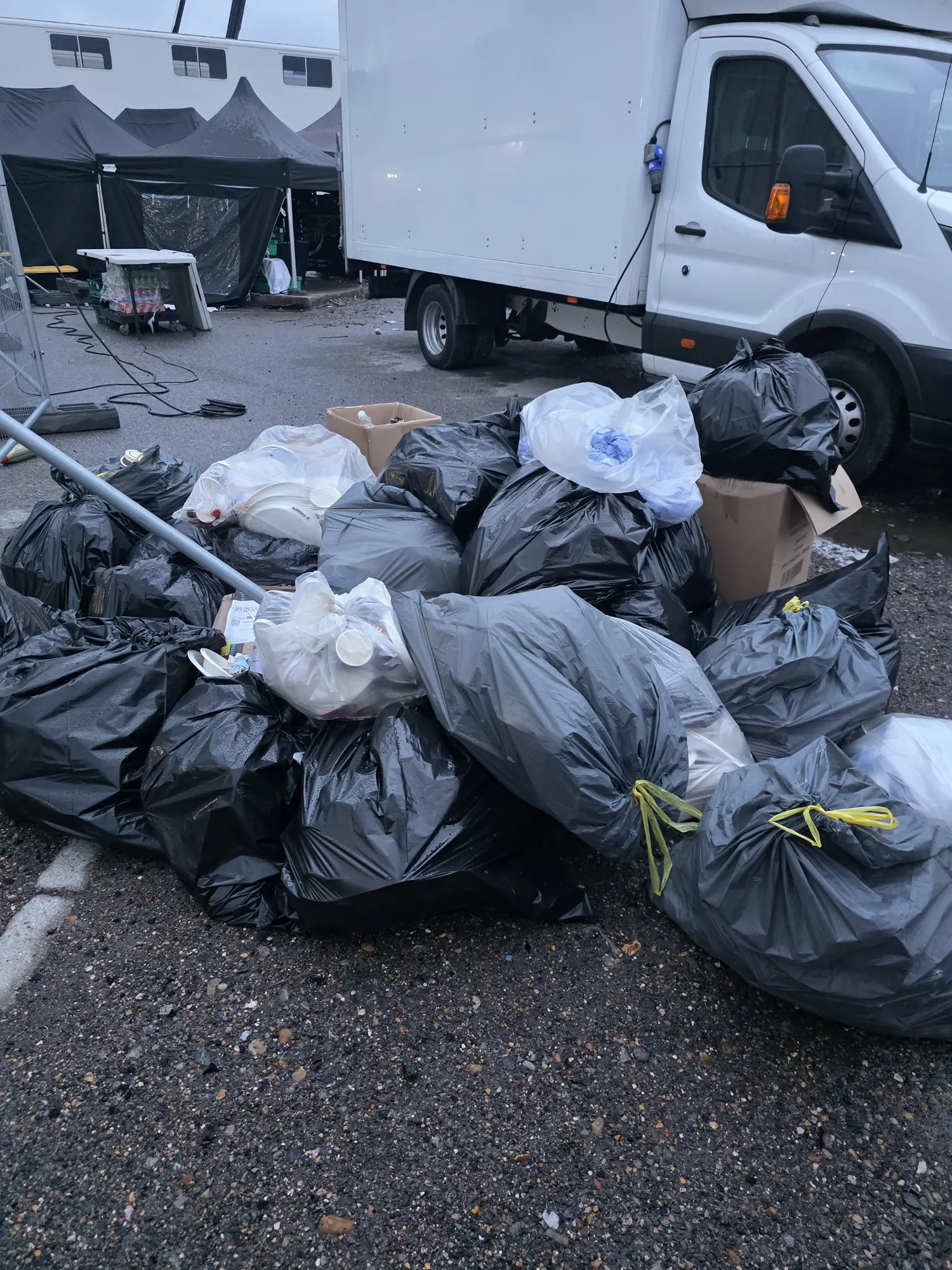
A unit base is the parking and support area for a film or TV shoot. It’s where the production keeps its facilities vehicles: costume and make-up trucks, catering, a dining bus, honeywagons (toilet trailers), generators and crew parking. It usually sits a short walk or shuttle from the set. Because the crew eat, change and take deliveries there, the unit base produces most of a shoot’s everyday waste, and it has to be cleared before the trucks pull out.
1.What a unit base is for
A set has to stay clear for the camera, so everything that keeps a crew working lives somewhere else. On a location shoot that somewhere is the unit base: a car park, a field, a school playground, a closed stretch of road or a council yard, booked for the length of the shoot.
What you find there depends on the size of the production, but a typical London unit base includes:
- Facilities vehicles: costume, make-up and hair trucks, and artist trailers where actors wait between scenes.
- Catering: the catering truck, a dining bus or tent, and the water it needs to run.
- Welfare: honeywagons and welfare units, so the crew has toilets and somewhere to warm up. Our honeywagon guide explains how they work.
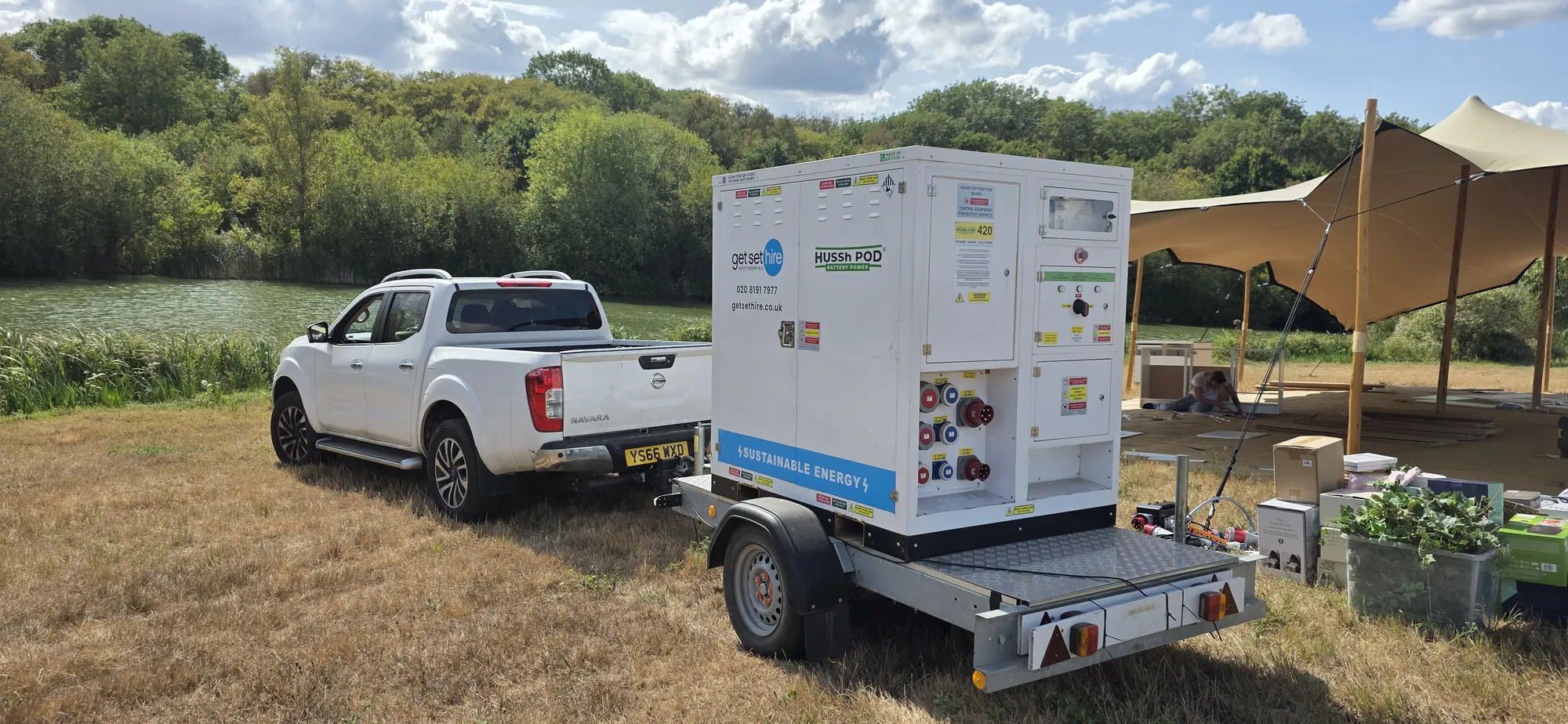
- Power: generators, or quieter battery and hybrid units where the location is sensitive to noise.
- Technical trucks and crew parking: the grip, electrical and camera trucks when they aren’t on set, plus parking for everyone else.
Some shoots move base every few days. Others sit on one base for weeks and send the crew out to several locations from it.
2.Where unit bases go in London
Space is the hardest thing to find on a London shoot. Film London’s Code of Practice for location filming asks productions to submit parking plans to the borough’s film contact and to make every effort to find off-street parking for facilities vehicles, so bases tend to end up in car parks, industrial estates, playing fields, parks and studio lots rather than on residential streets.
Wherever it is, the base has to be agreed with the landowner or the borough film office. Some film offices ask for the unit base to be listed as its own entry on the filming application, even when it’s next door to the set. Our guide to filming in London and borough film office rules covers the permissions in more detail.
3.The waste a unit base produces
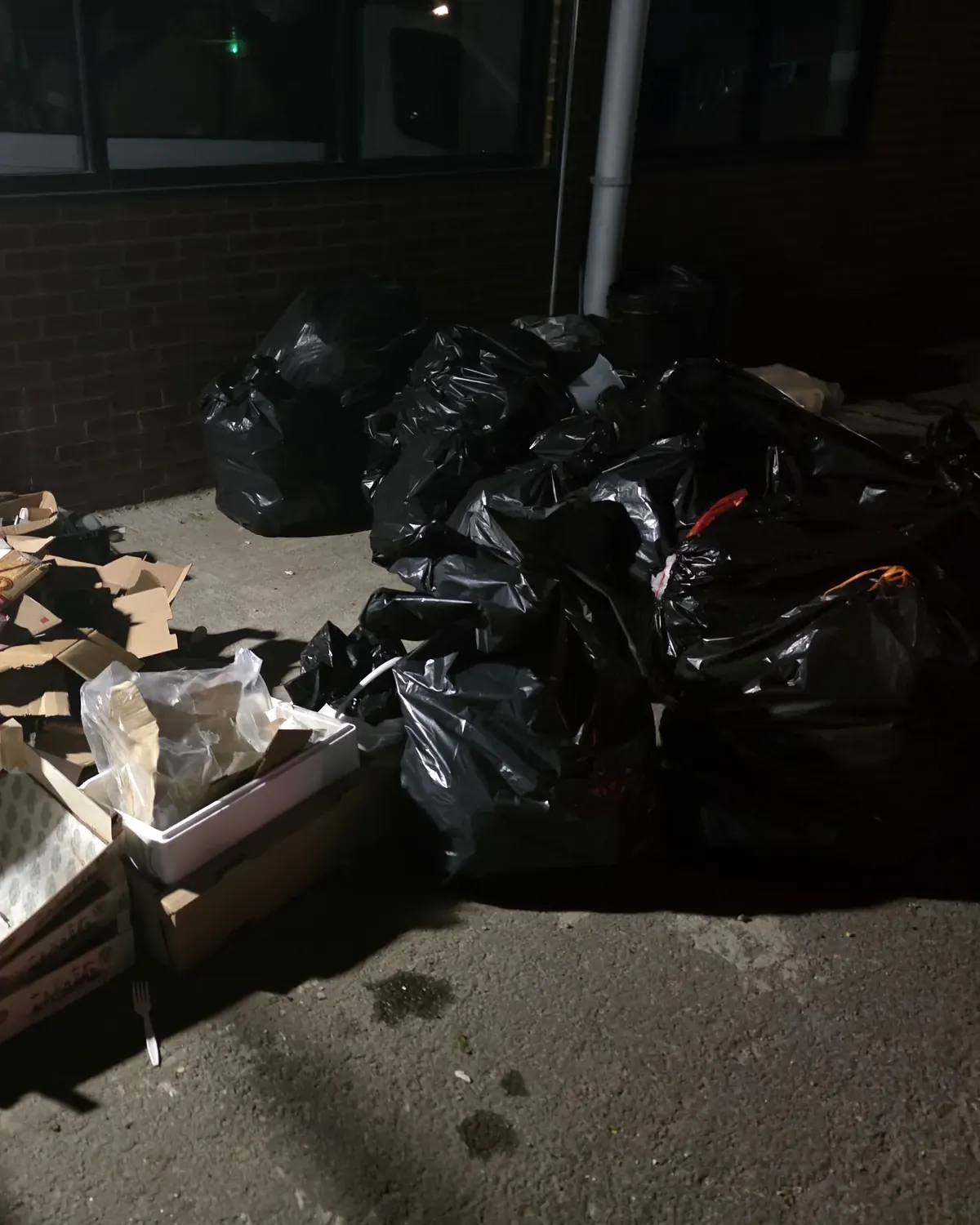
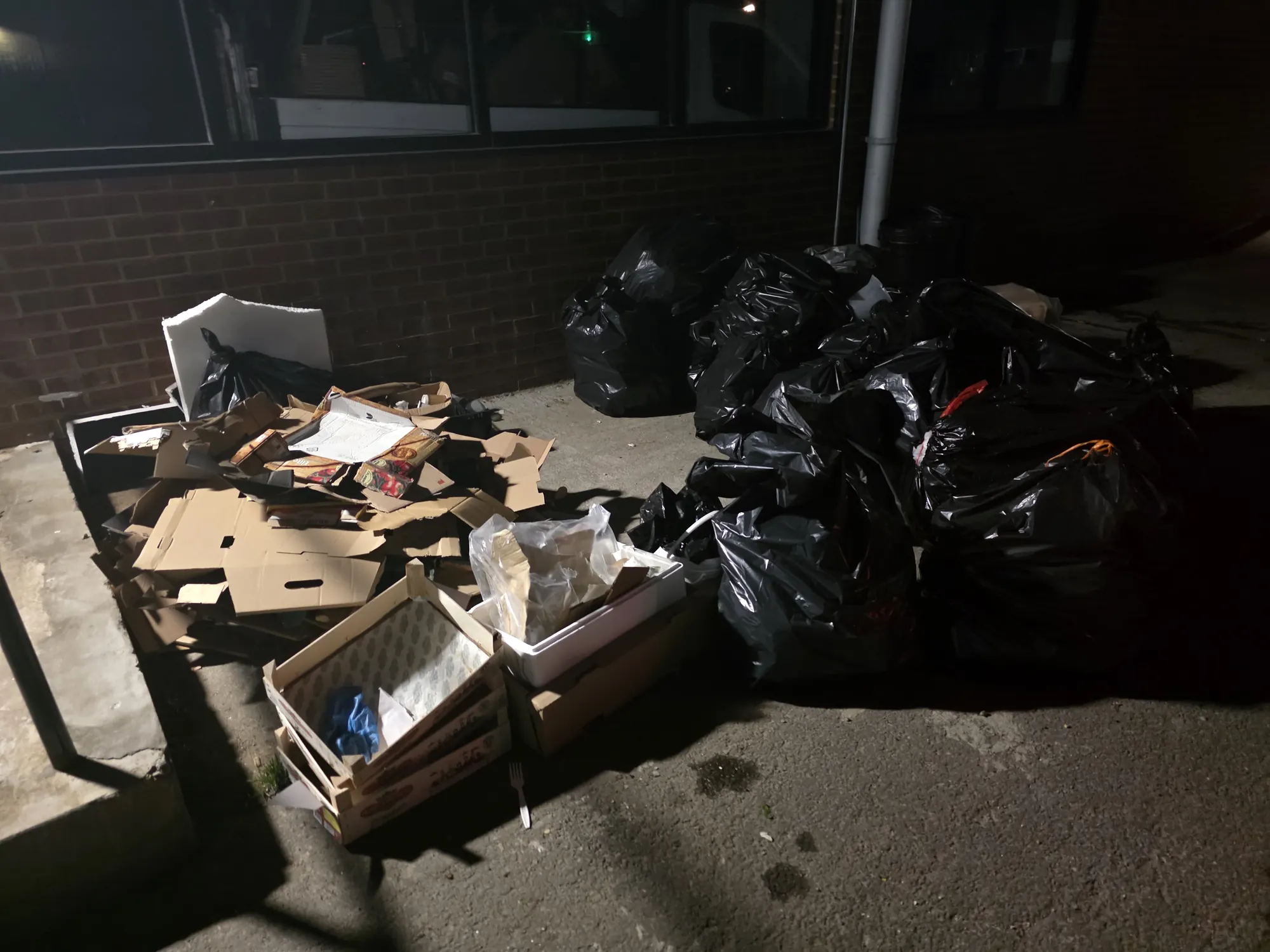
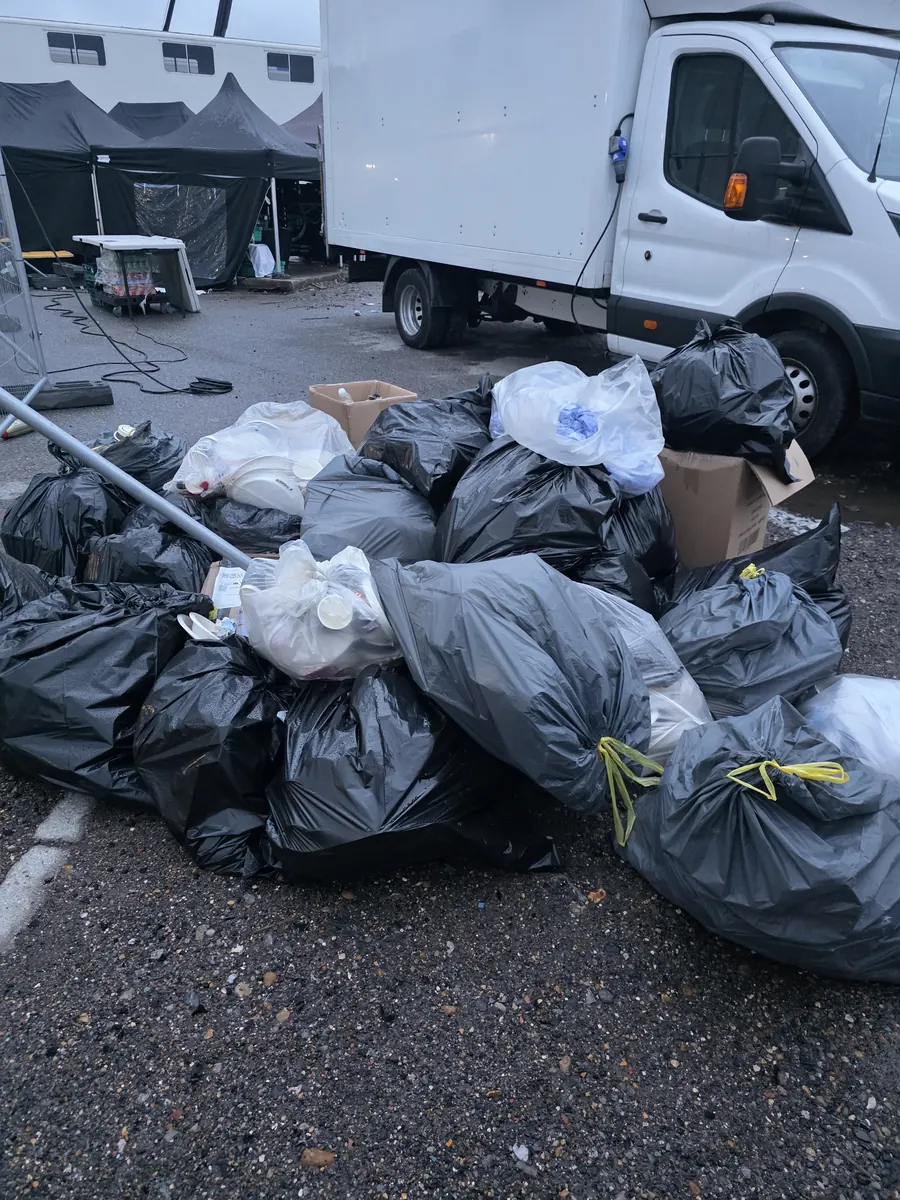
The set produces the dramatic waste: flats, timber, dressing. The unit base produces the steady stuff, every single day. On a busy base that usually means:
| Waste | Where it comes from | Where it should go |
|---|---|---|
| Food waste | Catering, crew meals, snacks | Its own labelled bags, kept out of everything else |
| Cardboard | Deliveries, costume and props boxes, water packs | Flattened, kept dry and kept separate |
| Dry mixed recycling | Bottles, cans, clean plastic packaging | Clear bags, with nothing wet or greasy inside |
| Soft plastics and shrink wrap | Pallet wrap, costume bags, packaging | Bagged separately for recycling |
| General waste | Everything that can’t be separated | Heavy-duty sacks for general waste |
The Code of Practice also asks productions not to let dirty water or food waste go into rainwater gullies, and for caterers to use a dirty water bowser where possible. That’s one reason bowsers are part of a unit base, and one we deliver as part of our trailer transport work.
4.How we clear a unit base
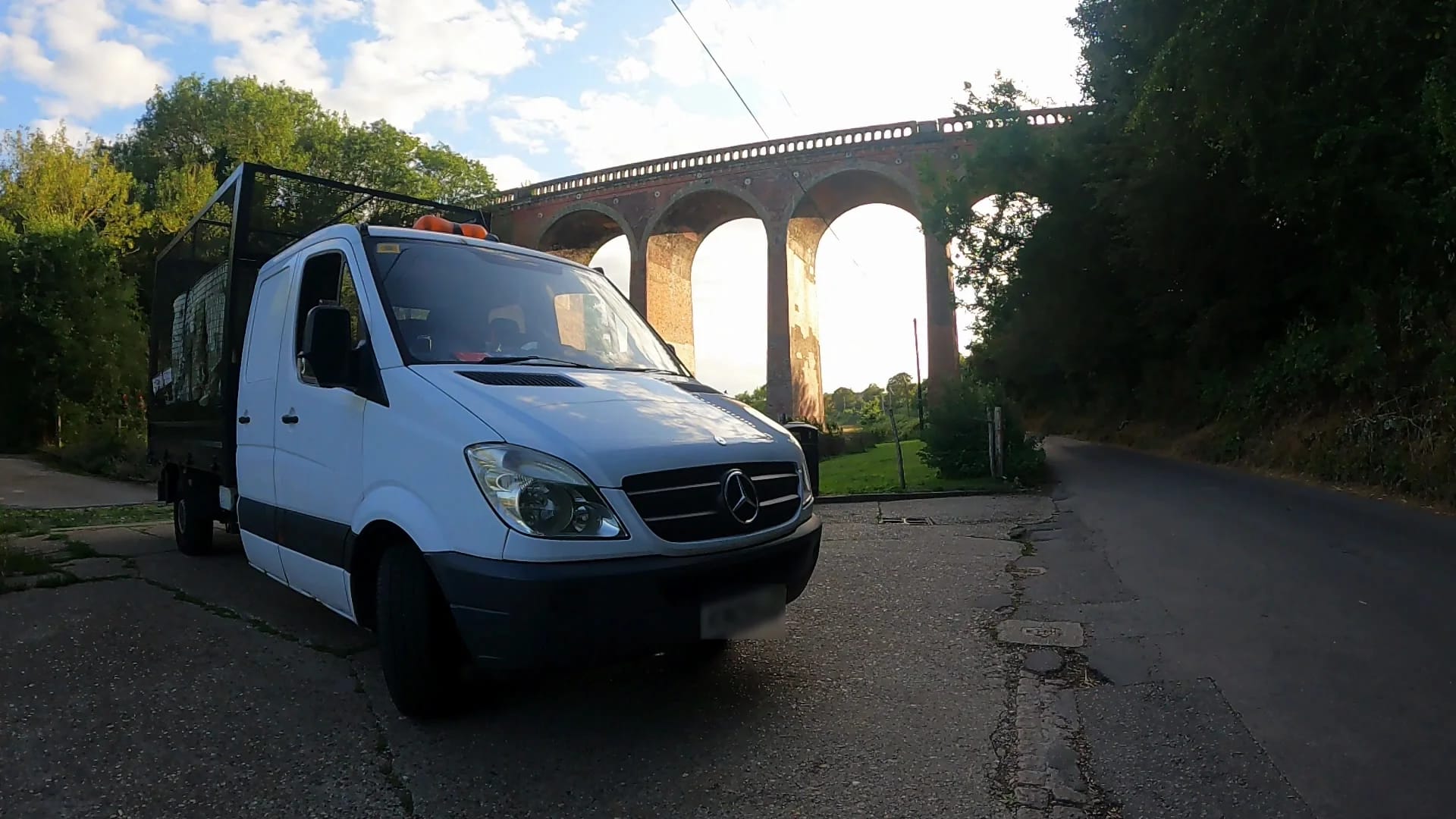
Unit base clearance is one of the jobs we do most for productions. The aim is simple: bags, packaging and catering waste gone from the base and the crew parking before the trucks pull out, and the ground handed back the way it was found.
- Agree a collection timeUsually at wrap, or before the move to the next base. Tell us where the van can stop and how far the waste has to be carried.
- Keep the streams apartIf the base has been sorting food, cardboard and recycling, we keep it that way as we load. Our caged vans let us hold streams apart instead of tipping everything into one load.
- Load and sweepWe load by hand, pick up what’s been missed around the vehicles, and keep noise down if the base is near homes.
- Report if you need itProductions tracking their sustainability can ask for a free waste report with the number of bags, the approximate weight and an estimated carbon impact.
5.Common unit base waste problems
- Bags left by the vehicles. The base is cleared but bags are still tucked behind the dining bus. Do a last walk round once the trucks have gone.
- Contaminated recycling. One bag of food in the cardboard and the whole lot can be rejected by the recycling facility.
- Residents’ bins. Production waste doesn’t belong in household or street bins near the base. It’s business waste and needs a registered waste carrier.
- No room for the van. If the collection vehicle can’t get near the waste, the job takes longer and costs more. Plan a spot for it.
- Hazardous leftovers. Paint, solvents and gas bottles need a specialist. Keep them out of general waste.
If you’re the location manager or unit manager responsible for the base, our location manager’s waste checklist goes through the whole job, from recce to hand-back.