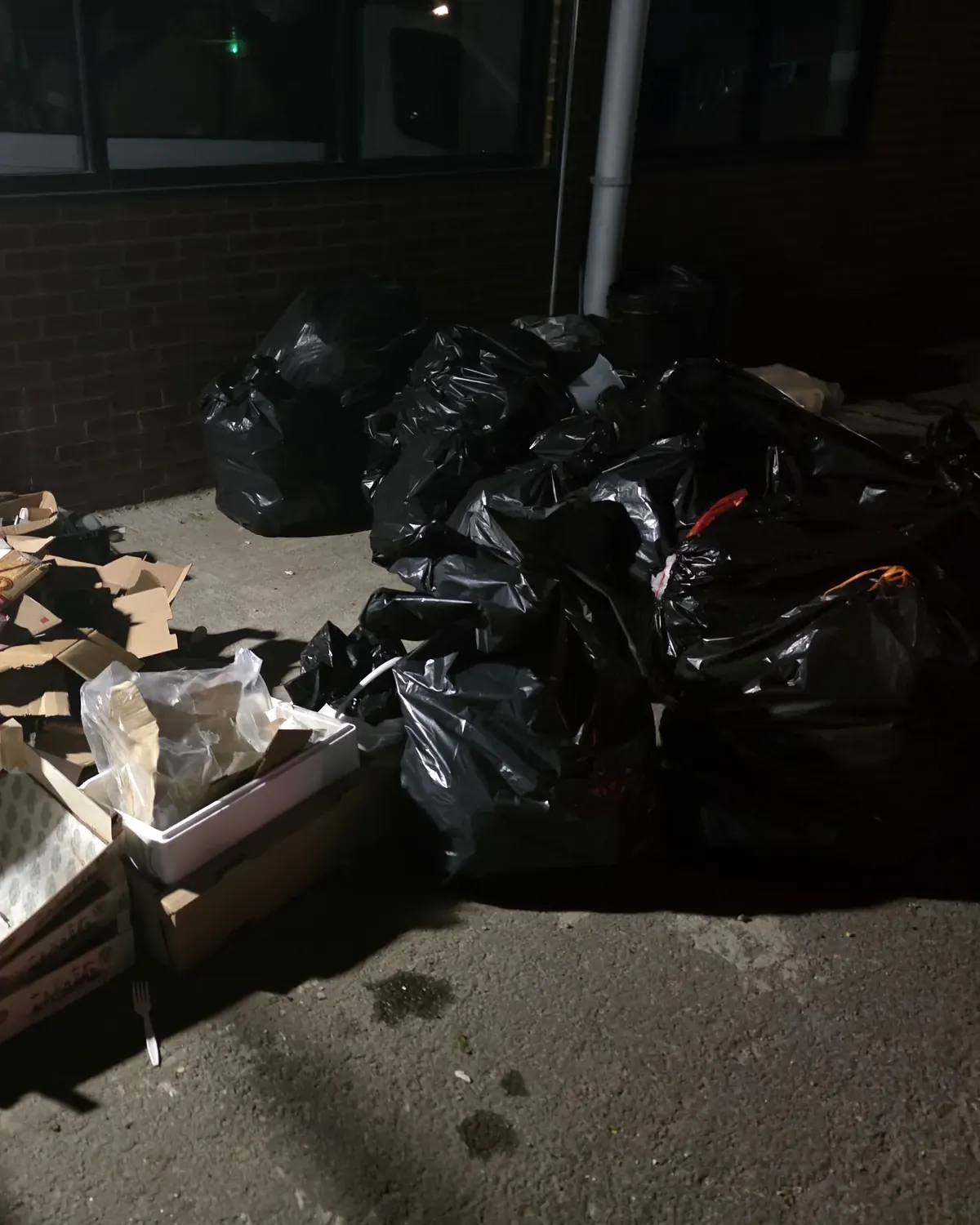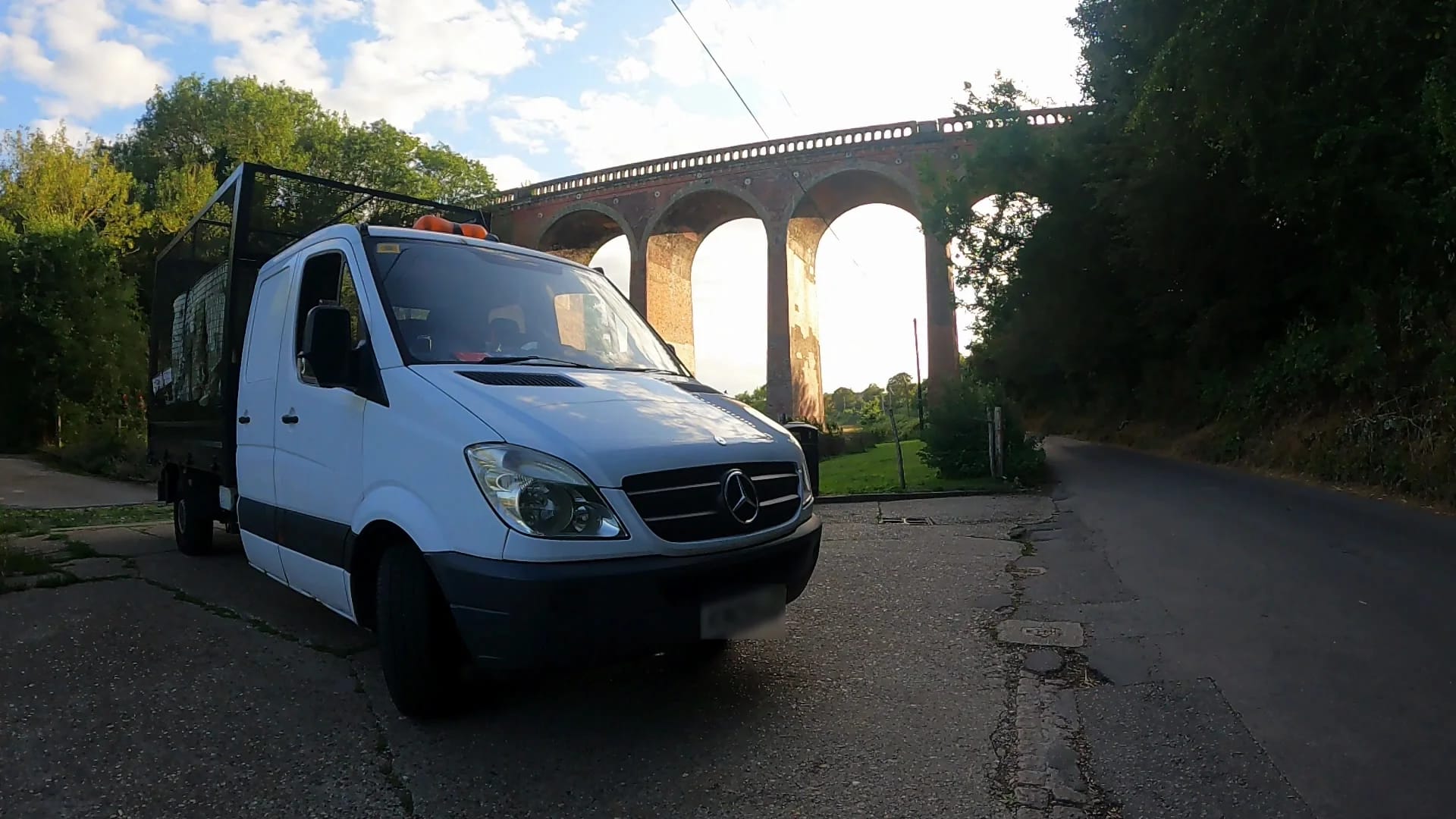
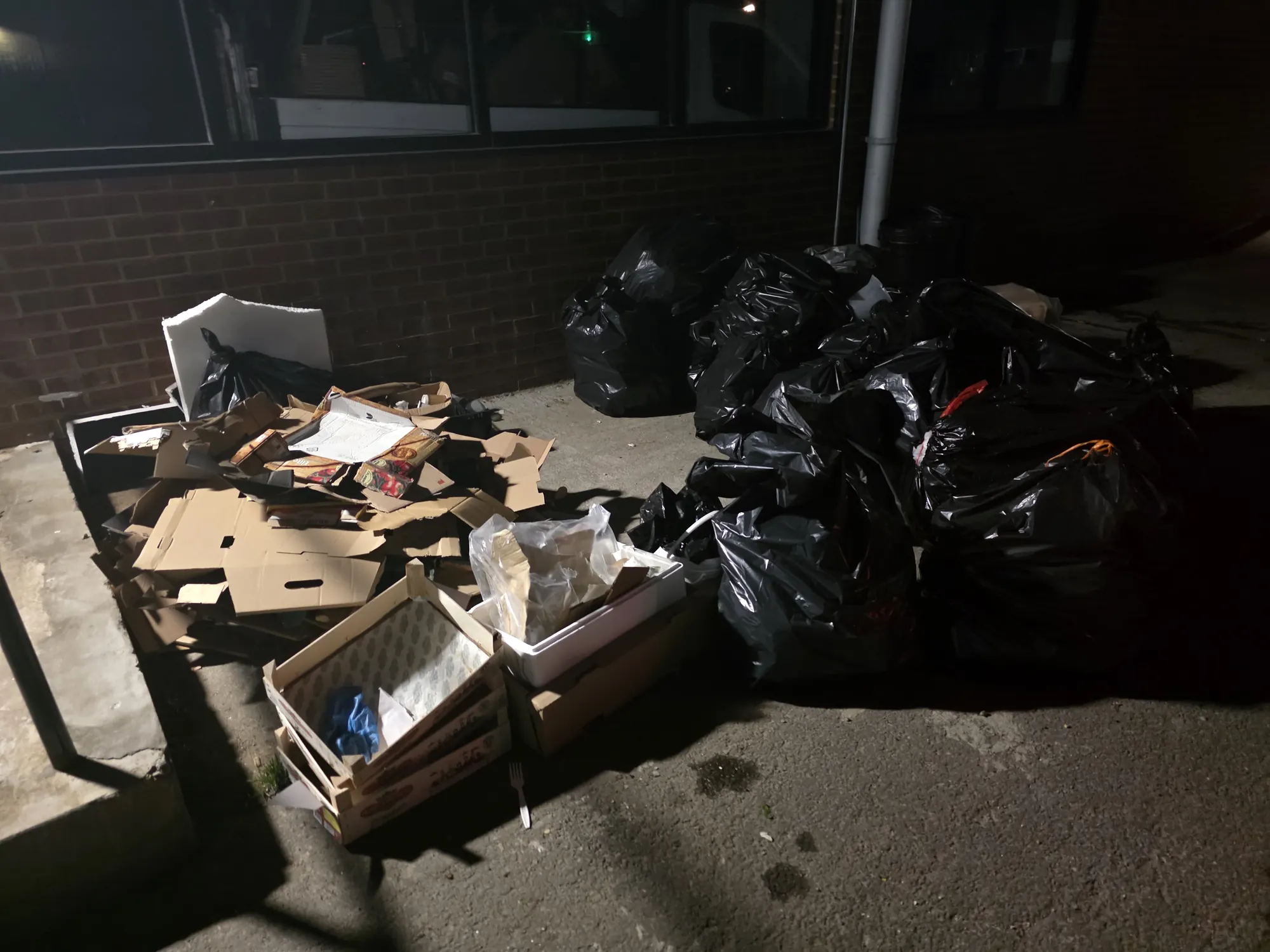
A location is only finished when it’s handed back clean. Before the shoot, agree where waste will be kept, when it will be collected and where the collection vehicle can stop. On the day, set up separate bags for food, cardboard, recycling and general waste. At wrap, walk the location and the base, clear every bag and check drains and gullies. Then keep a record of who took the waste and how much was recycled.
1.Why waste lands on the location manager
On most productions the location manager is the person the owner, the neighbours and the borough film office will call if something is left behind. Film London’s Code of Practice says the production shall make sure all litter is removed immediately at the end of filming and that the location and its surroundings are returned to the condition they were found in. In practice, that lands on the locations team.
Most of our film work comes from location managers, often at the end of a long day when the original plan has fallen through. This checklist is built from those jobs.
2.At the recce
Five minutes on waste at the recce saves an hour at wrap. Look for these:
- A waste point. One place on set and one at the unit base where bags can be gathered out of shot and out of the way.
- Where the van stops. A legal space as close as possible to the waste point. Note height limits, gates, kerbs and narrow lanes.
- The carry. How far from the waste point to the van, and whether there are stairs, lifts or corridors in between.
- Drains and gullies. Where catering will be, and how dirty water will be kept out of rainwater gullies.
- Owner’s rules. Some locations have their own bins you mustn’t use, quiet hours, or rules on where vehicles can go.
3.Before the shoot day
- Book the collectionSend the address, the wrap time and an idea of the waste. Photos from a similar job help us bring the right vehicle. If the postcode on the call sheet is approximate, send a pin as well.
- Agree the streamsDecide what will be separated: food, cardboard, dry mixed recycling, wood, green waste, general. If your production needs separate streams or a sustainability report, agree it before the collection.
- Sort out parkingArrange suitable, legal parking for the collection vehicle. Tell us about loading bays, permits or restrictions so there are no surprise charges.
- Brief the departmentsCatering, art department and facilities should know where waste goes and which bags to use. Heavy-duty sacks can be supplied if you ask when booking.
- Check the carrierWhoever takes the waste must be a registered waste carrier. Our guide on how to check a waste carrier licence takes two minutes.
4.On the shoot day
- Label the bags. Clear bags for dry mixed recycling, labelled bags for food waste, flattened cardboard kept dry.
- Keep recycling clean. Food and liquids contaminate a load, and contaminated recycling can be rejected by facilities and end up as general waste.
- Keep set and base separate. Set strike waste (timber, flats, dressing) is heavier and bulkier than base waste. Tell us if both are coming.
- Watch the pile. If there’s a lot more waste than you planned, tell us before the collection so we can send the right vehicle.
- Keep hazardous items apart. Paint, solvents, oils and gas bottles can’t go with general waste and need a specialist.
5.At wrap and hand-back
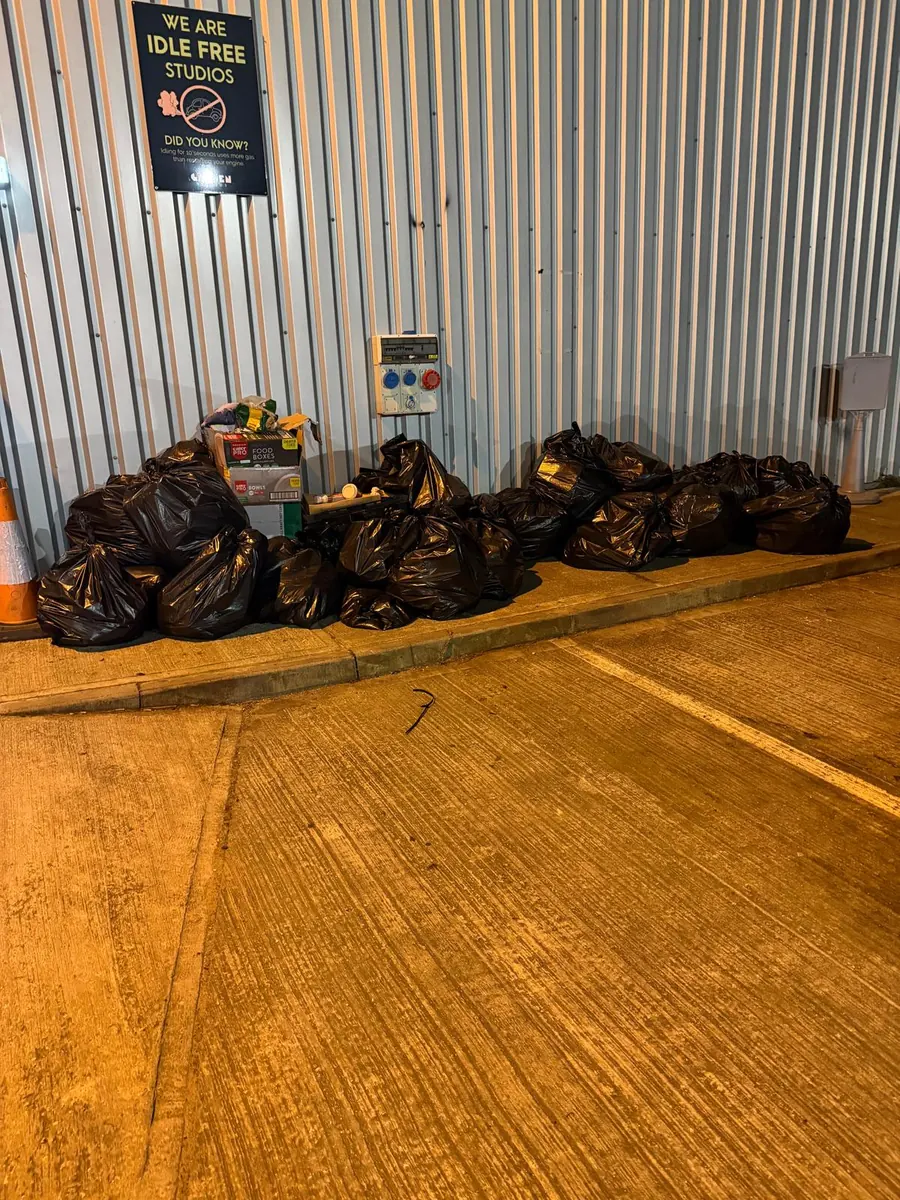
- Gather everything to the waste pointBags, boxes, offcuts and anything left by the vehicles. It’s quicker to load from one place.
- Load and clearWe arrive at the agreed time, load by hand and keep the noise down at residential locations.
- Walk the locationSet, base, crew parking and the route between them. Look behind vehicles, in hedges and along kerbs.
- Check the gullies and the groundNo food waste or dirty water in drains, no cable ties or gaffer tape left on railings and trees.
- Photograph the hand-backA few photos of the clean location are your record if the owner or borough asks later.
6.After the shoot
Keep the booking messages and invoice: they show who took the waste and when. If the production is tracking its environmental impact, ask for a free waste report. Ours lists the number of bags and the approximate weight collected, with a summary and an estimated carbon impact.
For a deeper look at how much of a shoot’s waste can be recycled and how to prepare each stream, read our guide to recycling streams on a film set.